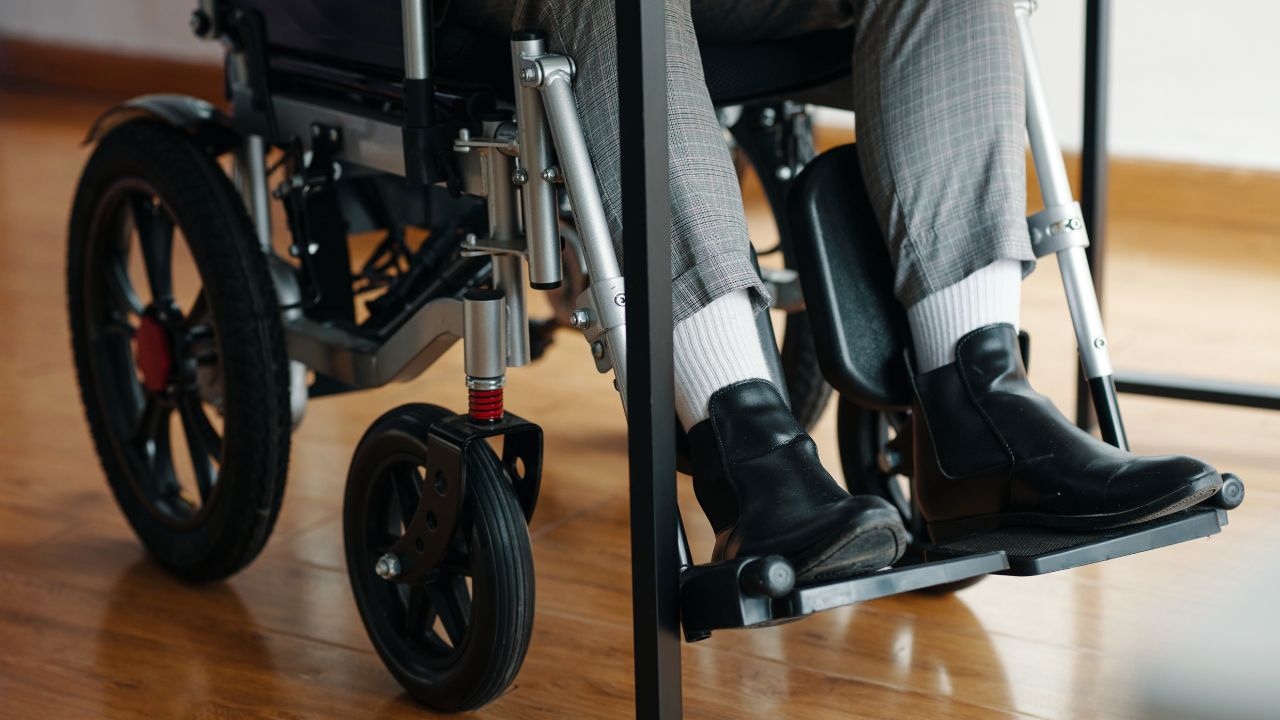
Power wheelchairs are life-changing mobility devices, but not all are created equal. If you’re navigating the world of power wheelchairs, whether for yourself, a loved one, or as a healthcare professional, understanding the classification system is essential to making informed decisions.
More importantly, as we explore these classifications, a critical question emerges: why aren’t advanced safety features standard across all power wheelchair groups?
What Are Power Wheelchair Groups?
The Centers for Medicare and Medicaid Services (CMS) established a classification system in 2006 that categorizes power wheelchairs into different groups based on their features, performance capabilities, and intended use. These classifications help determine appropriate equipment for users and guide insurance coverage decisions.
There are five main power wheelchair classifications:
Group 1 (Standard Use): Designed for intermittent use on flat, hard surfaces with minimal surface irregularity. These basic models have limited speed, battery life, and turning capabilities. They’re suitable for occasional indoor use but lack the features needed for active daily living.
Group 2 (Standard Plus Use): Built for regular use on flat surfaces with minimal to moderate surface irregularity. Group 2 wheelchairs offer speeds up to 4 mph, improved battery range, better maneuverability with six-wheel designs, and some obstacle-climbing capability. These are commonly seen with captain’s style seating but can accommodate some rehab seating modifications.
Group 3 (General Use): Engineered for continuous use on both flat and rolling terrain, including hard surfaces with moderate surface irregularity. These complex rehabilitation technology (CRT) wheelchairs feature higher speeds (often 5-7 mph), extended battery life (15-20 mile range), superior obstacle navigation, and full customization capabilities including power tilt, recline, and seat elevation.
Group 4 (High Activity Use): Designed for frequent use on uneven terrain and surfaces with moderate to extreme irregularity. These specialized wheelchairs handle challenging outdoor environments that other groups cannot navigate safely.
Group 5 (Pediatric Use): Specifically designed for children under 125 pounds with gentler speed controls and single power options appropriate for younger users.
The Performance Gap Between Groups
The differences between these groups aren’t just technical specifications on paper. They represent fundamental capabilities that directly impact user safety, independence, and quality of life.
Consider battery range. A Group 2 wheelchair might provide sufficient power for indoor use, but what happens when a user wants to attend a full day of classes, work an eight-hour shift, or spend time outdoors? Group 3 wheelchairs address this with larger battery capacity, but this enhanced safety feature comes at a premium price point.
Obstacle detection represents an even more significant safety divide. Research published in Disability and Rehabilitation: Assistive Technology demonstrated that blind spot sensor systems dramatically improve obstacle detection accuracy while reducing cognitive task load for power wheelchair users. Yet these safety-critical features remain rare across all wheelchair groups.
The Safety Feature Inequality Problem
Here’s where the current system reveals a troubling gap: advanced safety features that could prevent the majority of wheelchair-related injuries are typically only available on higher-tier, more expensive models.
According to data from the National Library of Medicine, approximately 100,000 wheelchair-related injuries occur in US emergency rooms annually, with tips and falls accounting for 65-80% of injuries across all age groups. Many of these accidents could be prevented with proper safety technology.
Current safety disparities include:
Collision Avoidance Systems: While modern automobiles include blind spot detection as standard equipment even in economy models, power wheelchairs across all groups rarely include obstacle detection as a standard feature. Users must either purchase expensive Group 3+ models or aftermarket additions.
Multi-Modal Alert Systems: Users with vision or hearing impairments face unique safety challenges. Multi-modal alerts using light, sound, and vibration can make navigation safer for diverse users, yet these features aren’t standardized across wheelchair groups.
Navigation Assistance: Real-time guidance to help users navigate tight spaces safely could prevent countless collisions and falls, but remains unavailable on most standard wheelchairs.
Alternative Drive Control Compatibility: Users with limited mobility who rely on sip-and-puff, head array, or other alternative controls typically must qualify for Group 3 wheelchairs to access these options, creating barriers to safe independent mobility.
Why This Matters for Real People
The classification system wasn’t designed to create inequality. It was meant to match equipment capabilities with user needs while managing healthcare costs. However, the unintended consequence is that essential safety features are priced out of reach for many users.
Consider a senior citizen with arthritis who needs a power wheelchair for daily activities. They might qualify for a Group 2 wheelchair through insurance, which provides adequate speed and range. But without blind spot sensors, they’re at significantly higher risk of backing into obstacles they can’t see or hear, potentially leading to dangerous collisions.
Or think about a person with a progressive neurological condition. They might start with a Group 2 wheelchair, but as their condition advances and they require alternative drive controls, they must go through the complex process of justifying and obtaining a Group 3 chair. Meanwhile, they’re using equipment that may not adequately protect them during the transition period.
The research is clear: 21% of power wheelchair users experience accidents in a year, and studies show that sensor integration can help users avoid obstacles more effectively.
The Case for Universal Safety Standards
Just as automotive safety regulations require all vehicles to meet minimum safety standards regardless of price point, power wheelchairs should include essential safety features across all groups.
The technology exists. Studies on smart wheelchair systems using ultrasonic sensors, infrared rangefinders, and collision avoidance algorithms have demonstrated effectiveness in laboratory and real-world settings. The ANSI/RESNA WC-1:2019 standards acknowledge that modern wheelchairs can include obstacle detection systems and intelligent control systems, yet these remain optional rather than mandatory.
What should be standard across all power wheelchair groups?
Basic Obstacle Detection: Sensors that alert users to obstacles in blind spots, particularly when backing up or turning in tight spaces.
Emergency Braking Systems: Automatic slowing or stopping when obstacles are detected at unsafe proximity.
Battery Life Indicators: Clear, accessible alerts when battery power is running low to prevent users from becoming stranded.
Tipping Prevention Technology: Anti-tip mechanisms and alerts for unsafe inclines or unstable surfaces.
User-Customizable Alerts: Flexibility to adjust alert types (visual, auditory, tactile) based on individual sensory abilities.
Moving Toward Safer Mobility for All
The good news is that change is possible. Advocacy from disability rights organizations, combined with advances in affordable sensor technology, is creating momentum toward more inclusive safety standards.
Some manufacturers are beginning to offer enhanced safety features as add-ons, making advanced protection accessible to users across different wheelchair groups. Retrofittable safety systems allow existing wheelchair users to upgrade their equipment without purchasing entirely new devices.
Healthcare providers and occupational therapists play a crucial role by advocating for appropriate equipment during the prescription process. When clinicians document safety concerns and medical necessity, insurance companies are more likely to approve higher-level equipment or safety modifications.
Navigotech: Bringing Advanced Safety to All Wheelchair Users
At Navigotech, we believe that safety shouldn’t be a premium feature reserved for top-tier wheelchairs. Our innovative blind spot sensor system was designed specifically to address the safety gap across all power wheelchair classifications.
Unlike competitors that only provide proximity alerts, Navigotech’s multi-modal system combines light, sound, and vibration alerts with on-screen navigation guidance. This comprehensive approach helps users navigate tight spaces confidently, whether they’re using a Group 1 wheelchair in an assisted living facility or a Group 3 wheelchair for full-time community mobility.
Our technology is:
- Compatible across wheelchair groups: Designed to integrate with wheelchairs from Group 1 through Group 4, including those with alternative drive controls like sip-and-puff or head array systems.
- Accessible for diverse users: Multi-modal alerts ensure that users with vision or hearing impairments can navigate safely without relying solely on visual or auditory cues.
- Easy to install and use: Our user-friendly interface provides clear, real-time instructions without overwhelming users with complex controls.
- Affordably priced: We’re committed to making advanced safety technology accessible rather than exclusive.
By providing enhanced spatial awareness both indoors and outdoors, Navigotech helps prevent the falls, tips, and collisions that account for the vast majority of wheelchair-related injuries.
Conclusion
Understanding power wheelchair classifications is essential, but we must also recognize that the current system leaves many users without access to life-saving safety technology. As we work toward a future where all power wheelchairs meet rigorous safety standards regardless of classification, solutions like Navigotech demonstrate that advanced protection can be both effective and accessible.
Whether you’re a wheelchair user, caregiver, healthcare provider, or institutional decision-maker, advocating for universal safety features will help create a safer, more equitable mobility landscape for everyone.
Safety isn’t a luxury. It’s a fundamental right for all wheelchair users, regardless of which classification they need or can afford.